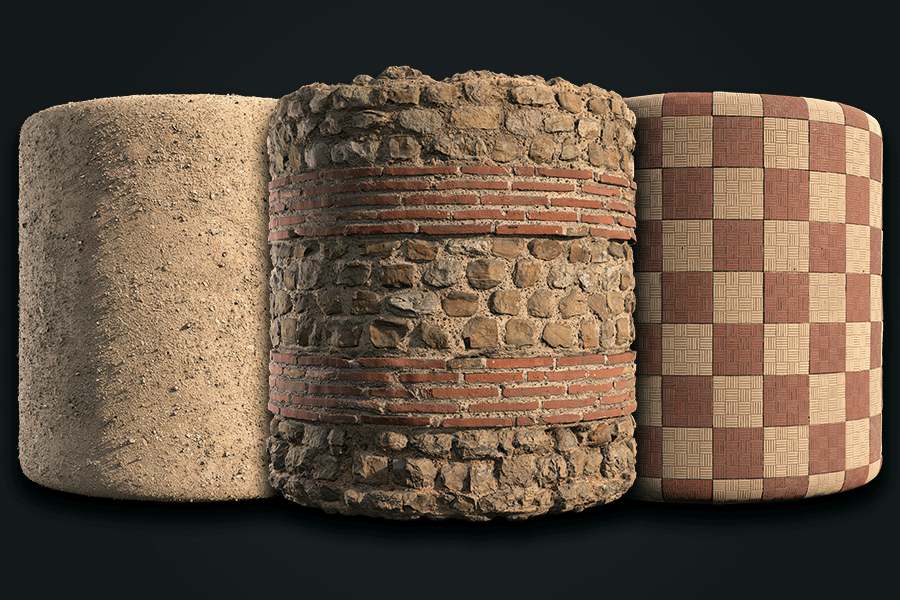
Overview
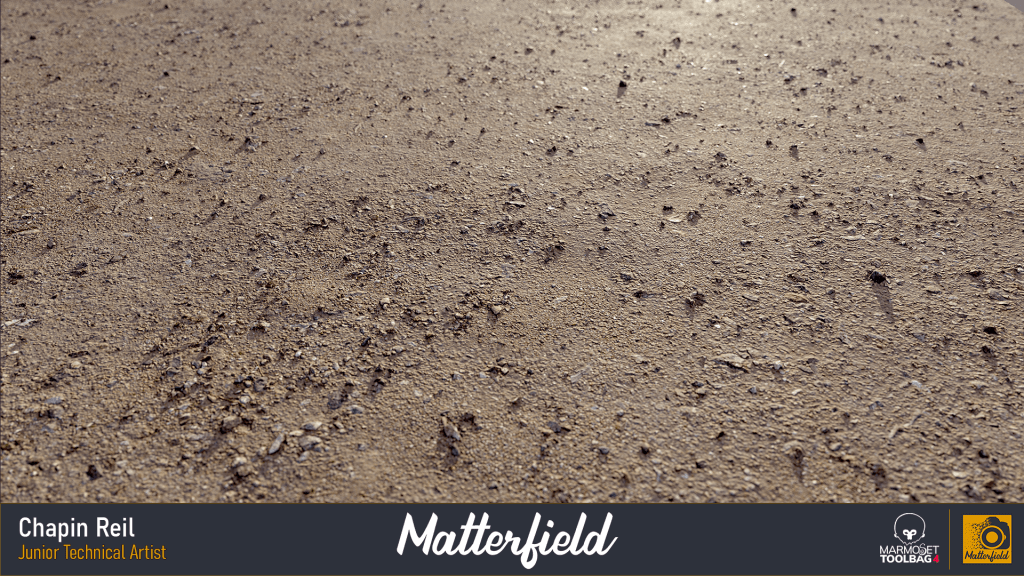
During my time at Matterfield one of my primary responsibilities was working with photogrammetry scan data, captured by Matterfield’s photographers, to create tileable materials. The goal with all the materials was to tile the surfaces while keeping as much of the original scan’s character as possible, and without visible artifacts. Below is a collection of nine different materials I processed at Matterfield.
Natural Surfaces
These first three materials are a collection of natural surfaces you’d find in nature. With these materials the challenge was to keep as much character of the raw scan while not breaking the tiling by leaving a feature the viewer could easily tell was repeating. Creating the roughness map was important as well to showcase the wide range of roughness values these surfaces have in nature. The melting snow material below is a good example as most of the material is wet from the melting snow but the surface has not been completely covered in water yet.
Melting Snow Surface
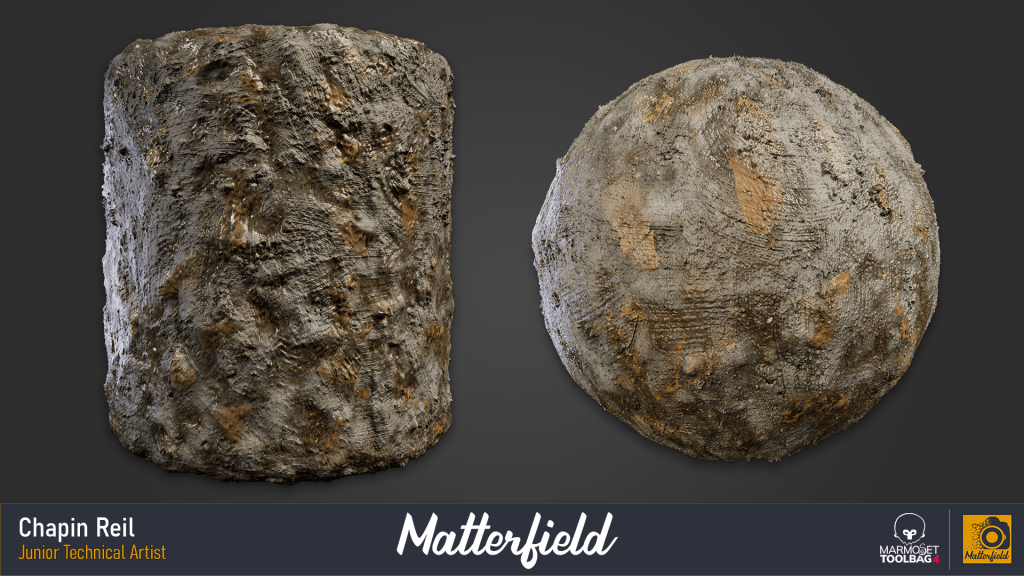


Beach Stone Pebble Surface

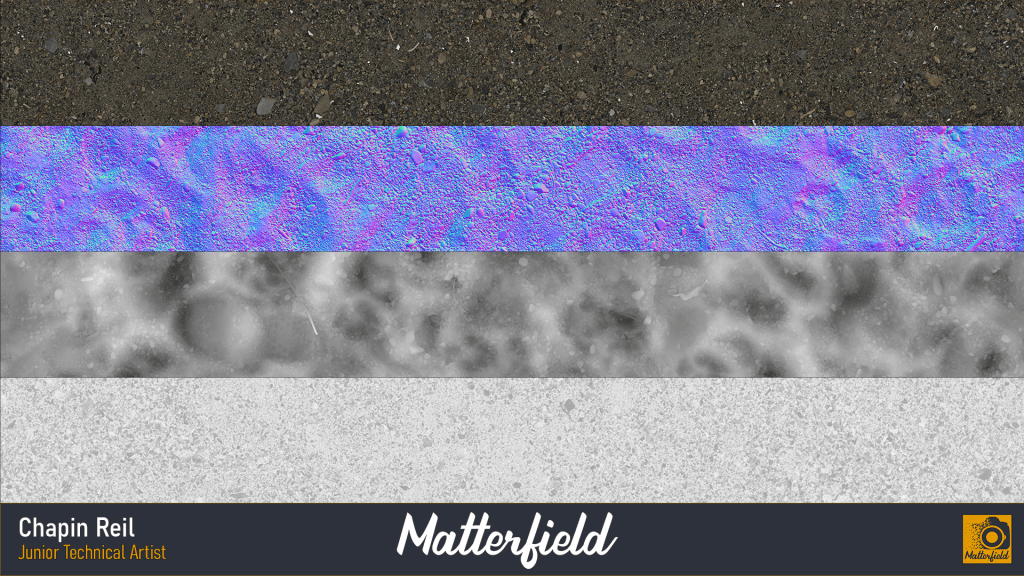
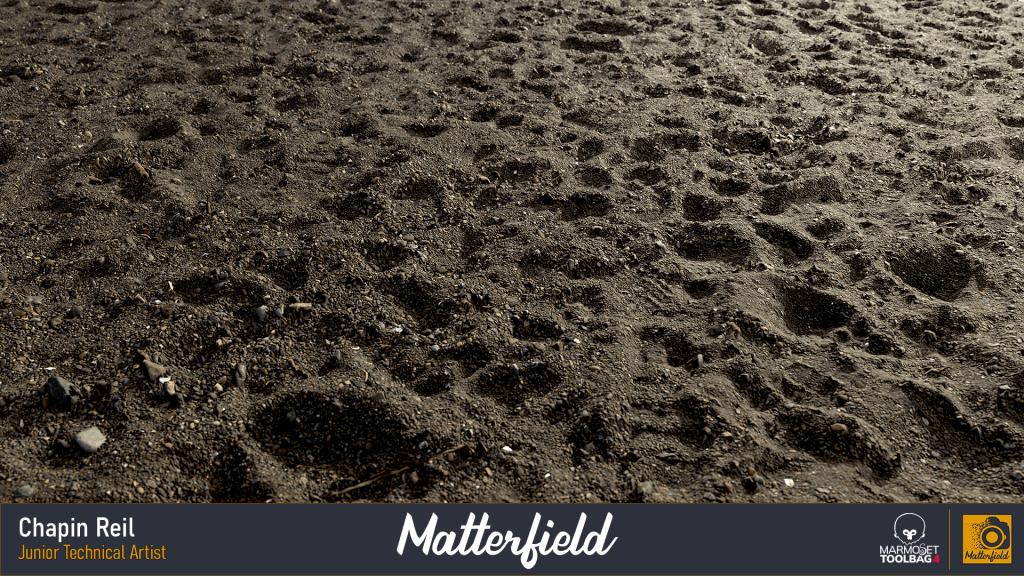
Chipped Stone Soil Surface


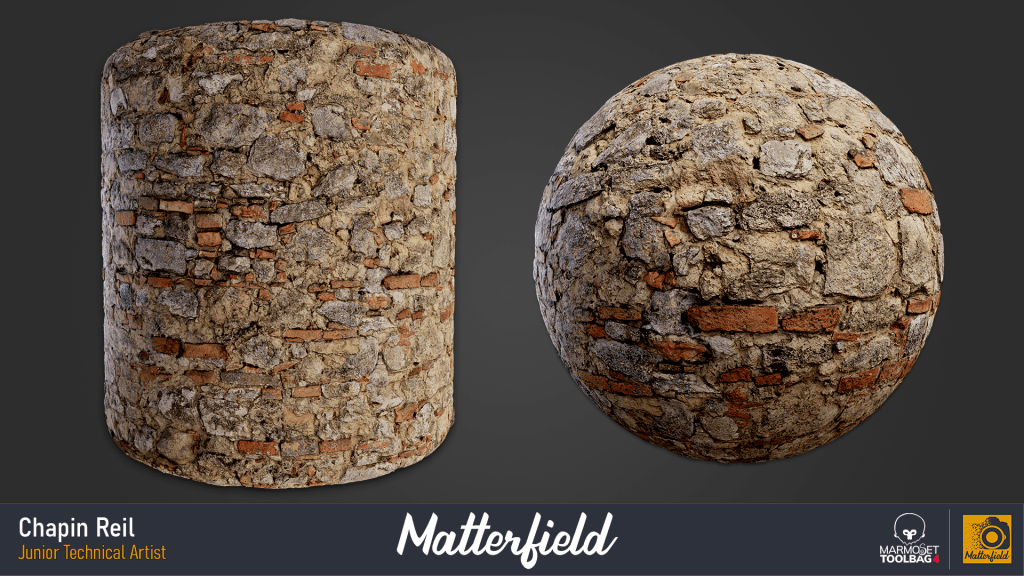
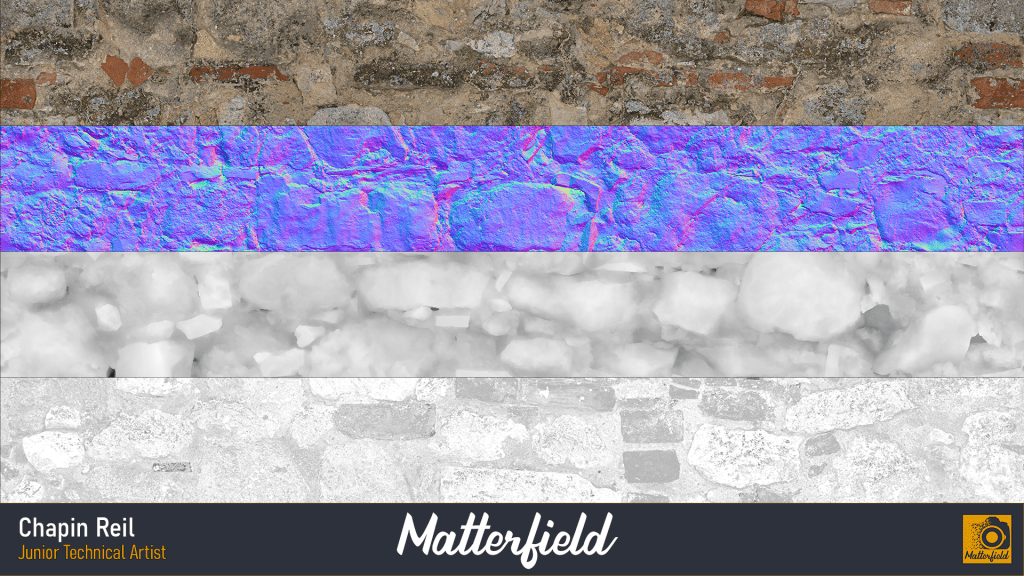
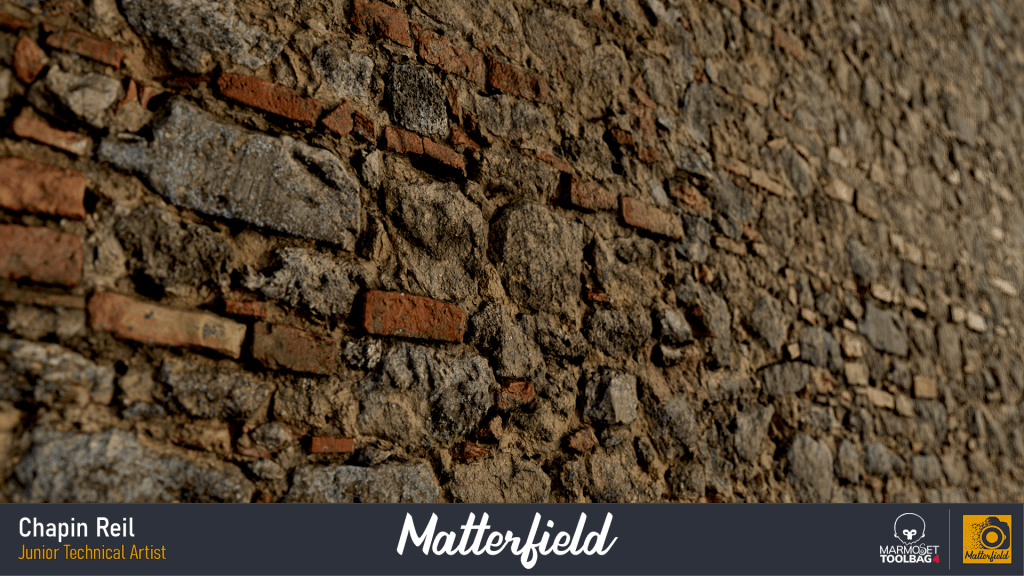
Rock Wall Surfaces
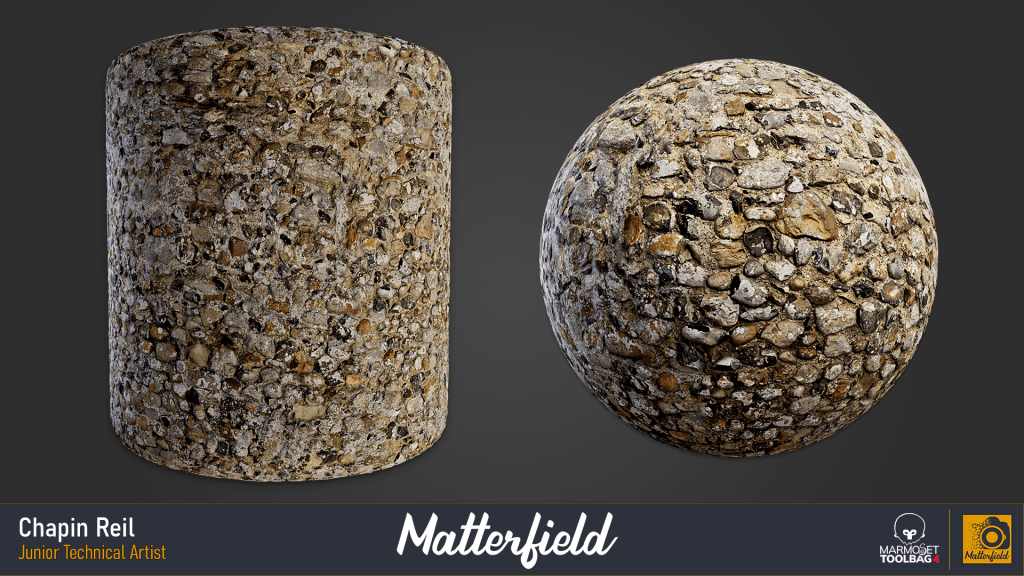
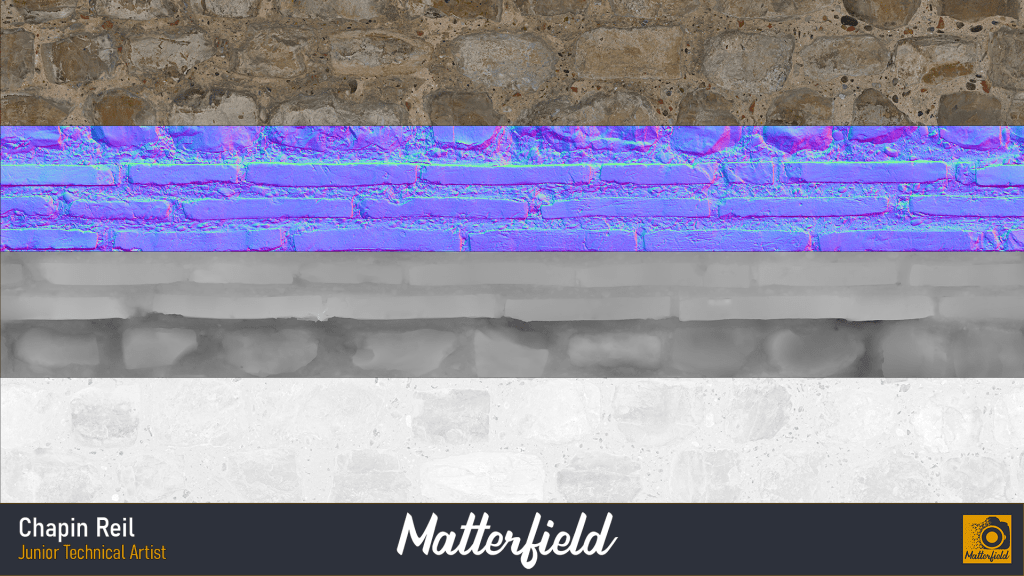
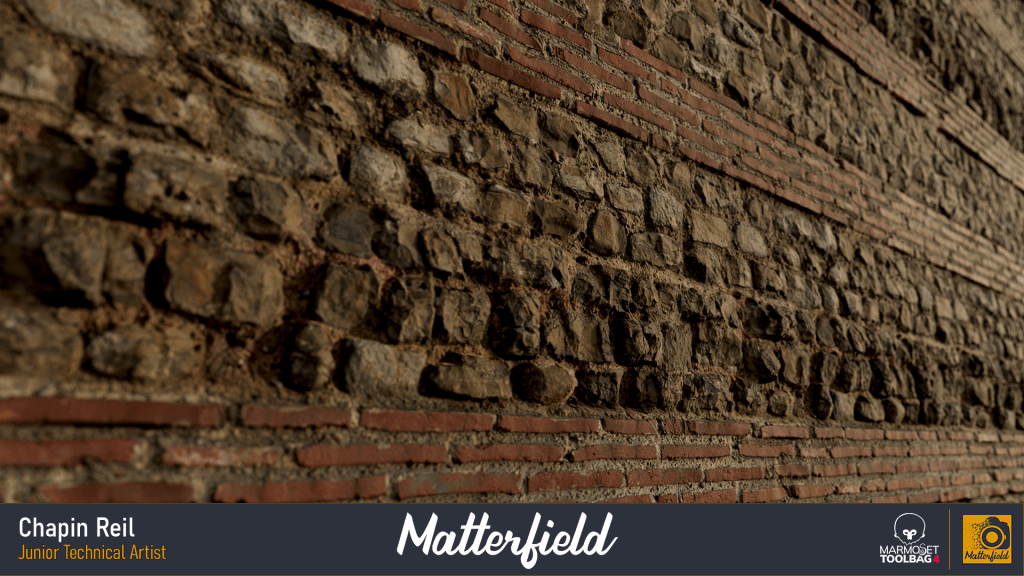
These next materials are different types of wall surfaces made with rock. My goal with these materials was similar to the natural surfaces, to keep the unique qualities of the stone work but make sure if it was being tiled three or more times that a specific stone would not catch your eye and break the tiling.
Flint Rock Wall Surface


Roman Wall Surface

Medieval Wall Surface
Floor Tile Surfaces
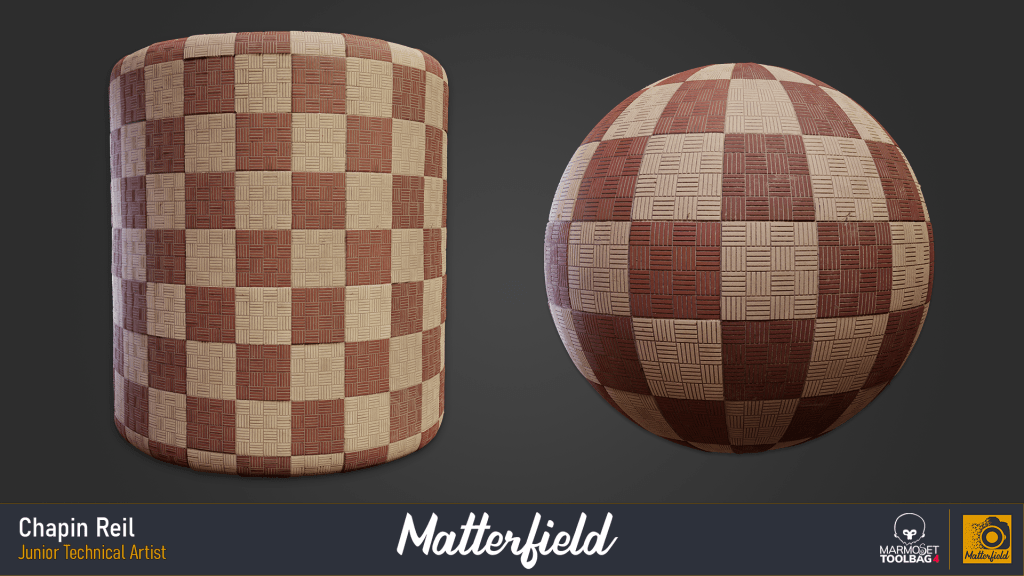
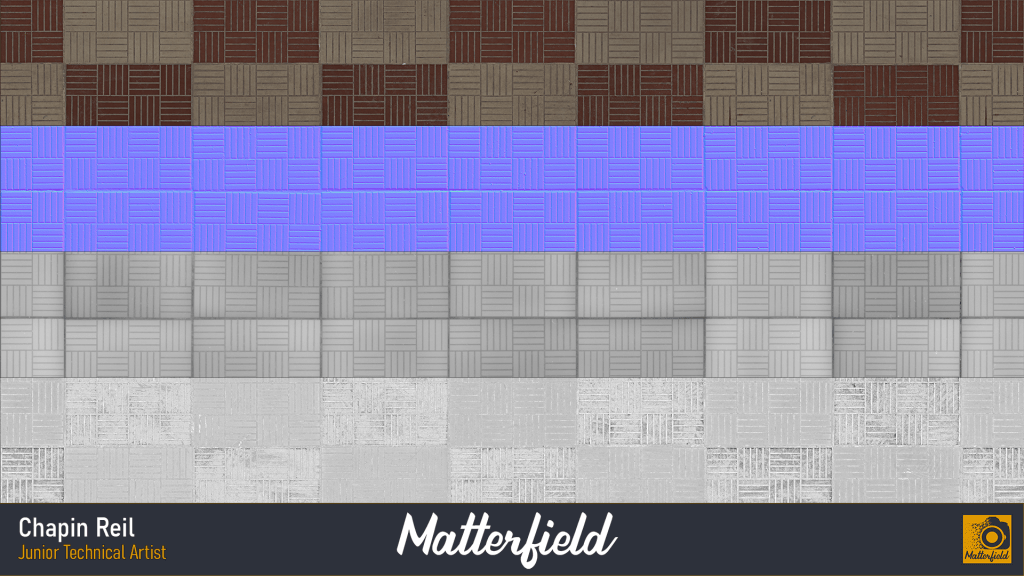
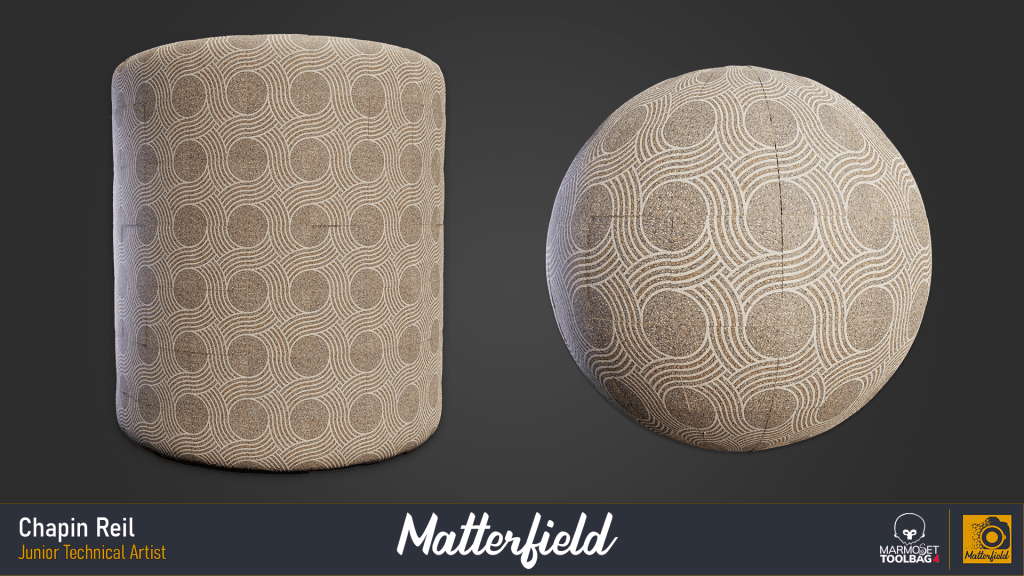
The materials below are a collection of floor tile surfaces. It was important with these surfaces to make sure that all of the tiles fit together in each texture map. Additionally it was important to make sure the roughness had variance to let the light in a real-time scene catch the light shining onto the surface.




 Chapin Reil